Buy or Wait
We will say which, and why, not a guess.
A buy or wait signal that shows its reasoning, planned.
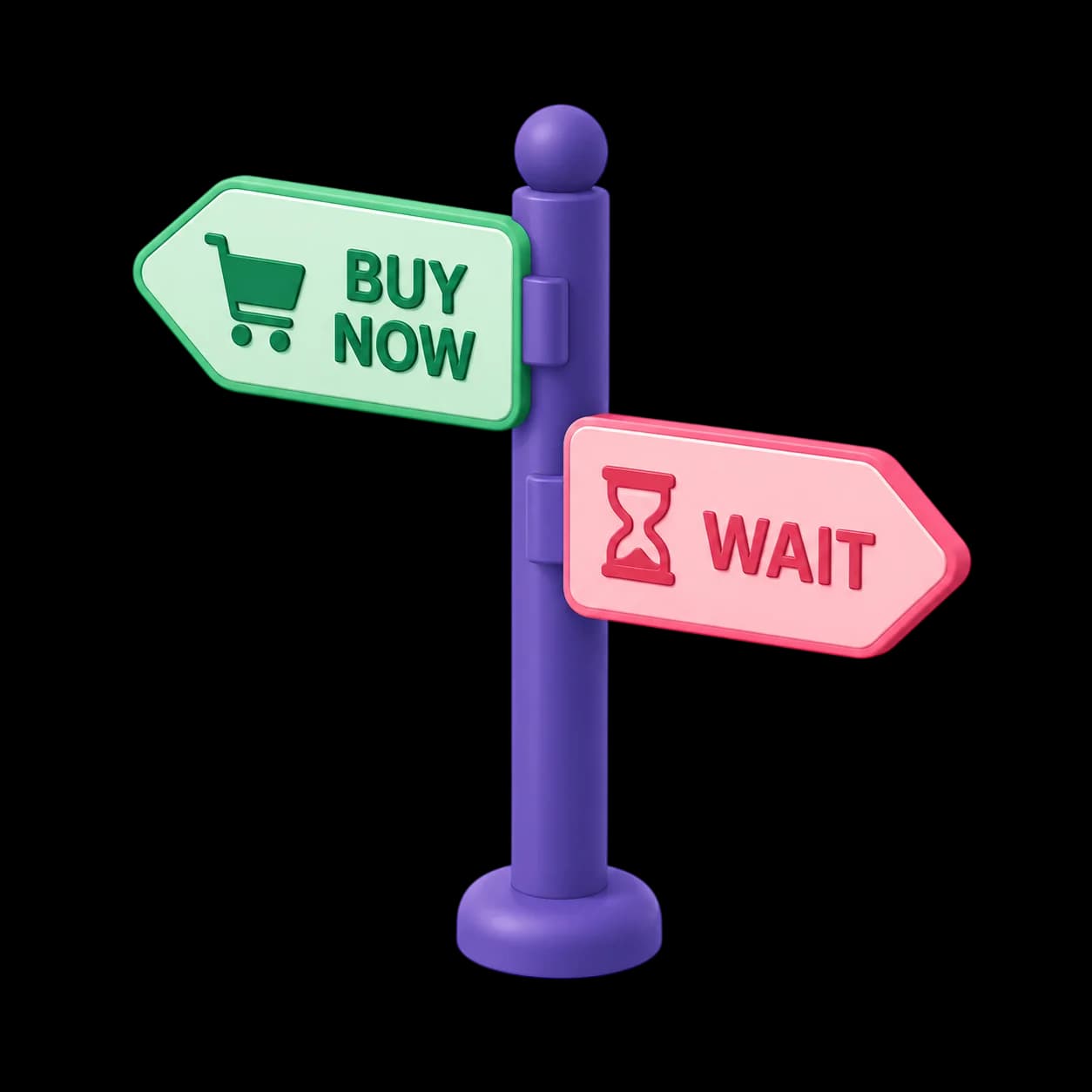
Illustrative example
Same price shown everywhere. Different meaning in context.
8% above the 90-day average, and the lowest recent price was ₹1,649. No meaningful recent drop to justify buying at today’s price.
Current price ₹1,799, 8% above the 90-day average. Lowest observed price was ₹1,649. No meaningful recent drop. HAULS’ signal: Wait, with the reasoning shown, not hidden behind a badge.
Planned, step by step
What HAULS will do
HAULS is pre-launch. The buy or wait signal is planned. Here is how it is meant to work, with an example that is illustrative only.
- HAULS will look at the price history it has recorded for the product.
- It will compare today's price with its recent range and its average.
- It will give a signal, Buy or Wait, and write out the reason in plain words.
- You decide. The signal is a view of the price history, not an instruction.
Honest limits
What it cannot know
- A signal is only as good as the price checks behind it. Few checks mean a weaker view, and HAULS will say so.
- HAULS will not predict future prices or promise a sale is coming.
- It will not know your need. If you need the item this week, the best price may not matter.
- It will not judge product quality, only the price.
FAQ
Common questions
Is buy or wait available yet?
No. HAULS is pre-launch, the extension is not released and no real signals have been produced.
Is the signal a score or a guess?
Neither. The plan is to show the numbers and the reason beside the signal, so you can disagree with it.
Can it tell me if a sale price is real?
It will help you compare a sale price with the recorded history. It cannot prove why a price changed. Our guide on whether a discount is real explains the checks you can do yourself.
Related reading: is that discount real, was the price raised before the sale. Our checking rules are on the methodology page.
Why this matters
A score you can’t see the reasoning for isn’t advice, it’s a guess with confidence.
A crawl of about 11,000 online shopping sites found fake urgency and scarcity messages, countdown timers, and “low stock” claims, on hundreds of them, and classified them as manipulative design, not reliable signals.Princeton/UChicago, 2019
The FTC’s own report names fake countdown timers and false low-stock claims as deceptive “dark patterns” used to rush shoppers into faster purchase decisions.FTC, 2022
Research on recommendation systems found that making the reasoning behind a suggestion visible, not just a score, measurably improved both user trust and the recommendation’s own accuracy.Frontiers in AI, 2024
HAULS is being built now. Join the waitlist for launch access.